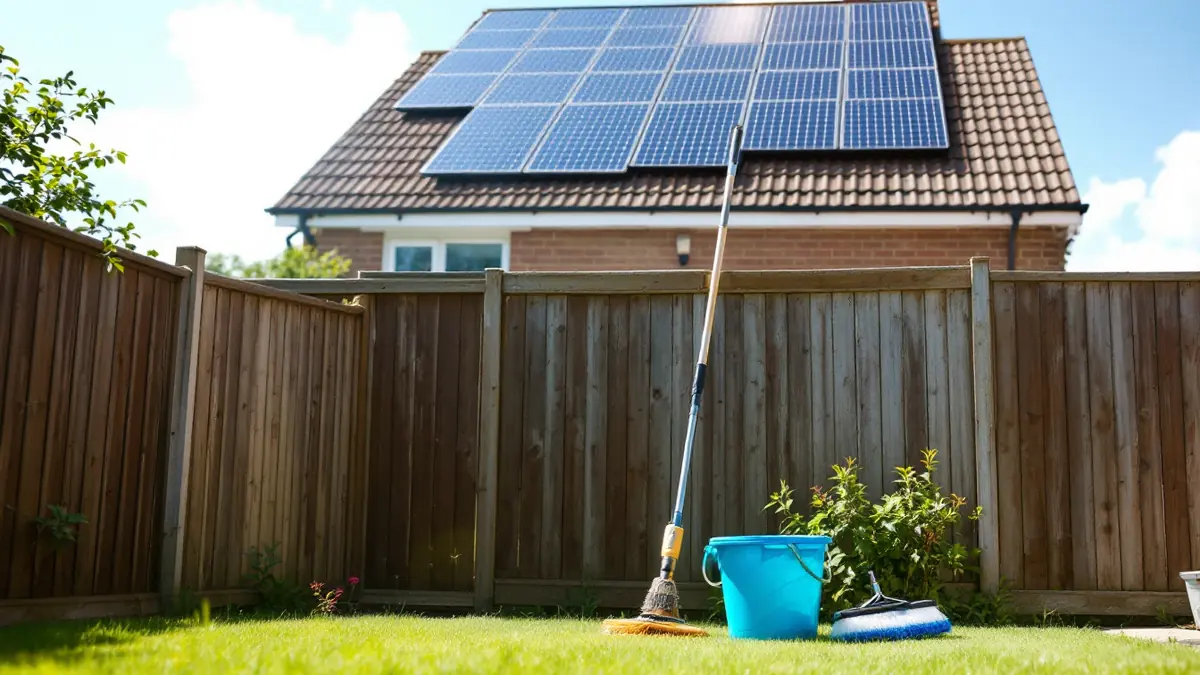
Solar panel maintenance is light work. Most UK homes need only a few minutes of watching and the odd check, because panels have no moving parts. This guide explains what to look at, when cleaning helps, and when to call in a professional.
The short answer is that a healthy system needs very little. However, a little attention protects your output and catches faults early. That matters because a small fault can run for months without anyone noticing.
How much maintenance do solar panels really need?
The Energy Saving Trust says solar panels should typically last 25 years or more. They get there with little help. The glass surface is tough, and there is nothing to oil or adjust.
The parts that need attention are the panels, the roof fixings, the wiring and the inverter. The inverter is the box that turns the panels’ direct current into the alternating current your home uses. The Energy Saving Trust says it usually needs replacing after about 12 years. You can read more in our guide to how long solar panels last.
Output also fades slowly over time. A major review of field studies by the US National Renewable Energy Laboratory found a median loss of about half a percent a year. That is normal ageing, not a fault.
So the real job is simple. Watch your output, keep the panels reasonably clear, and book a check if something looks wrong.
Do solar panels need cleaning?
In most of the UK, rain does the work for you. The Energy Saving Trust notes that panels tilted at 15 degrees or more are self-cleaning in UK rain. Most pitched roofs are steeper than that.
Some situations need more help. For example, panels under a tree collect leaves and bird droppings. Flat or shallow-pitched arrays also let dirt sit longer, because water runs off more slowly.
Look for a patchy layer of grime, not a thin film of dust. A thin film costs very little output. A thick patch over one panel can matter more, since it may drag down the whole string of panels.
If you see heavy build-up, clean the panels gently. If you see nothing, leave them alone. Over-cleaning gains you nothing and risks scratches.
How to clean solar panels safely
Safety comes first, because the roof is the real danger. Falls from height are a serious risk, and no clean panel is worth one. Never climb onto a roof to clean panels yourself.
If you can reach the panels from the ground or a low, flat roof, keep the method simple:
- Use plain water, ideally from a hose with gentle pressure.
- Use a soft brush or sponge on a long pole, if you need one.
- Skip pressure washers, abrasive pads and harsh chemicals, because they can damage the glass coating.
- Clean early or late in the day, when the panels are cool, so water does not dry in streaks.
- Do not touch any cable, and leave isolators alone.
For anything higher, hire a specialist with the right access equipment. Ask them what they use and whether they carry insurance. Because your warranty paperwork may set out care rules, check it before anyone touches the array.
What to check through the year
You do not need a long checklist. A few simple habits catch most problems.
Once a month, glance at your generation figures. Compare them with the same month last year, not with last week, because the seasons change output a lot. Our guide on whether solar panels work in winter explains the normal seasonal swing.
Each season, look at the panels from the ground. Check for cracked glass, loose cables, moss at the edges and any new shade, such as a growing tree. If you hear unusual noise from the inverter, or see a fault light or error code, note it down.
Once a year, look at the inverter display. Most show a status light or message. A green light is good, but an amber or red light means you should act.
Spotting a problem before it costs you
Early warning is the best maintenance tool you have. Output that dips for no clear reason is the main sign. For example, a cloudless week that produces far less than the same week last year is worth a closer look.
A monitoring app turns this from guesswork into a quick check. Many inverters include one, and a good setup shows daily and monthly totals. Our smart energy monitoring service is built around exactly this kind of visibility, so you see a problem the week it starts.
Common causes of lost output include:
- Shade from a new tree, extension or aerial.
- Dirt or droppings sitting on one panel.
- An inverter fault or a tripped switch.
- Loose or damaged cabling.
- Failing panels, which are rare.
Some of these you can fix at once. Others, such as electrical faults, need a qualified person. Never open the inverter or touch the wiring yourself.
When to book a professional health check
A professional check goes further than you can from the ground. A trained engineer can inspect the fixings and roof seals, test the electrics, read the inverter logs and measure what each string is producing.
Book one if your output drops without a weather explanation, after a storm, after roof work, or when the system is a few years old. You may also want a check before a manufacturer warranty ends, so that any fault is found while cover still applies.
Pier Solar offers system health checks for exactly this. Our partners are vetted, MCS-certified installers who can inspect your system and report in plain English. If you have a fault that needs fixing, the report tells you what to ask for.
Maintenance and your bills
Light upkeep protects the savings you installed solar for. A system that quietly loses output for a year costs you real money, and you may not notice without checking. For the bigger picture on returns, see our guide on whether solar panels are worth it and our breakdown of what solar panels cost in the UK.
Upkeep costs are usually small compared with the original outlay. If you add a battery later, the inverter choice matters, so read our guide to solar inverters explained first. Scottish owners can also read our notes on solar panels in Scotland, where long winters change what you see.
Maintenance in different parts of the UK
Where you live changes what you will see. Homes with many trees nearby expect the odd cleaning job. In wetter, windier places, rain does most of the work, but exposure can test roof fixings.
Local partners can advise on conditions in your area. Whether you want solar installation in Aberdeen, solar panels in Leicester or solar installation in Southampton, the same basics apply. Keep watch, keep the panels clear, and get a check if output falls.
If you would like help choosing a system that is easy to look after, contact Pier Solar through the online form and we will point you to a vetted partner.