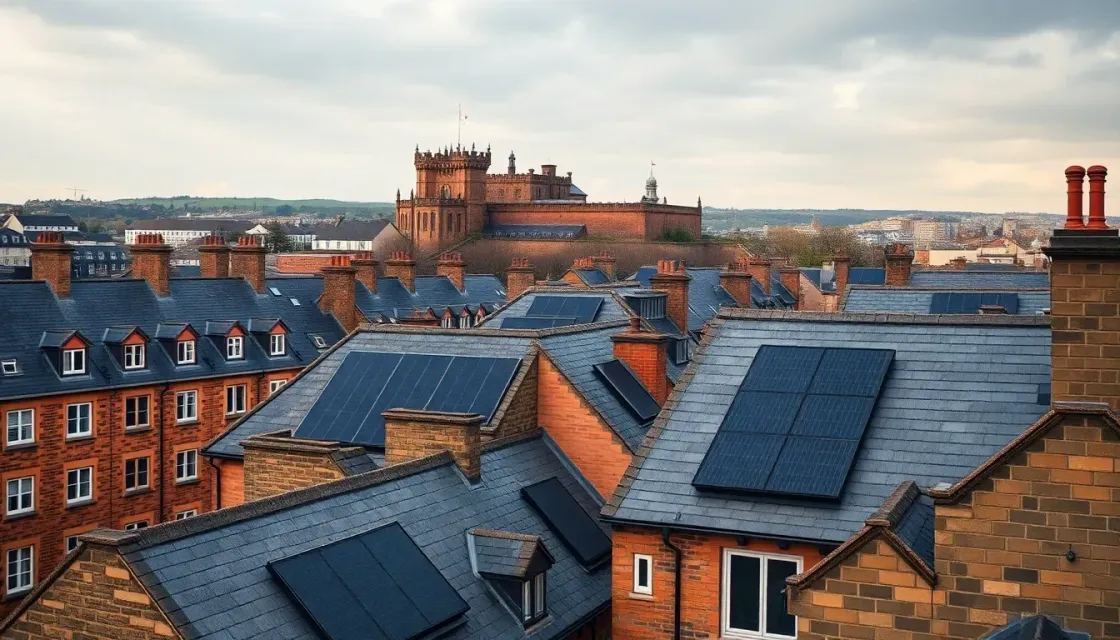
Pier Solar designs solar panel systems for Edinburgh homes and small businesses. We write the specification, and vetted MCS-certified partners carry out the survey and install. Edinburgh's heritage status shapes many projects.
The City of Edinburgh Council is the planning authority. Scotland has its own permitted development rules, which differ from England's.
Solar output in Edinburgh and what it means for a 4 kWp system
The EU's PVGIS tool models a well-placed 1 kWp of panels in Edinburgh at about 920 kWh a year. A typical 4 kWp system is about nine or ten modern panels. At the ideal angle, that adds up to roughly 3,680 kWh a year.
Real roofs are rarely at the ideal angle, therefore expect a little less. East or west roofs typically still make about 80%. A typical home uses about 2,500 kWh of electricity a year, according to Ofgem.
A 4 kWp system makes more than that over twelve months. However, winter is dark, so December output is typically about a third of July's. A battery can help you use more of your summer surplus.
Homes, roofs and planning in Edinburgh
The Old and New Towns of Edinburgh World Heritage Site and the large New Town conservation area cover much of the centre. The council's guidance says solar will not normally be permitted on listed buildings, or on walls and roofs seen from public places in a conservation area. Roof changes to a listed building need listed building consent.
In Scotland most homes can add solar without a planning application. No part may stick out more than 1 m from the wall or roof. Listed buildings and conservation areas have extra limits. In a conservation area, panels go only on the rear or on sides that do not face a road.
Outside the heritage core, many suburban homes face fewer limits. Always check with the council before you order. We can help you ask the right questions.
How a Pier Solar project runs in Edinburgh
Pier Solar designs the system and writes the specification, while vetted MCS-certified partners then survey the roof and install it. We cover system health checks and bespoke solar system design for homes and small businesses.
Design comes first. We model your roof, your shading and your daily use, then compare layouts. In heritage areas, we look at hidden roof faces first, because they are likelier to gain consent.
A competent person must check your roof can carry the panels before installation, because safety comes first. Your installer then fits the system and tests it. Small systems up to 3.68 kW per phase are notified to the network operator within 28 days of installation. Bigger systems need approval before the installer connects them. Your installer normally handles the application or notification.
Your installer should give you an MCS certificate within about ten working days of finishing. You normally need that certificate to be paid under the Smart Export Guarantee. Additionally, Pier Solar arranges an extended workmanship warranty, on top of the manufacturer product warranties.
Costs, savings and export in Edinburgh
A typical 4 to 4.5 kWp home system typically costs roughly £6,000 to £8,000 installed, based on government cost data for Great Britain. Installing solar panels in a home in Great Britain is currently VAT-free, until 31 March 2027. Home Energy Scotland offers interest-free loans for some energy upgrades, so check what covers solar.
Installing solar panels in a home in Great Britain is currently VAT-free, until 31 March 2027. From 1 April 2027 the rate is due to return to 5%, unless the government changes it. Each supplier sets its own export rate under the Smart Export Guarantee, therefore compare tariffs before you choose.
Our guide to solar battery storage costs and sizing covers the choice in depth. You can also read how the Smart Export Guarantee works. For rules and output north of the border, read solar panels in Scotland.
Nearby areas we cover
We also design systems across Scotland and the North East. See our page on solar panel installation in Glasgow for the west. Further south, see solar panel installation in Newcastle upon Tyne.
Ready to talk? Send your details through our online enquiry form. We will review your roof, your use and your plans before we suggest a design, because every roof is different.
Frequently Asked Questions
- It is hard. The council says solar will not normally be permitted on listed buildings or conservation area elevations visible from public views. Check with the council first.
- Yes, for roof alterations to a listed building. Listed buildings sit outside normal permitted development, so ask the council before any design work.
- PVGIS models about 3,680 kWh a year at the ideal angle. A real roof typically makes less, depending on pitch, direction and shade.
- A battery lets you use more of your summer surplus in the evening. It typically costs from about £2,500 up to £10,000, depending on size.