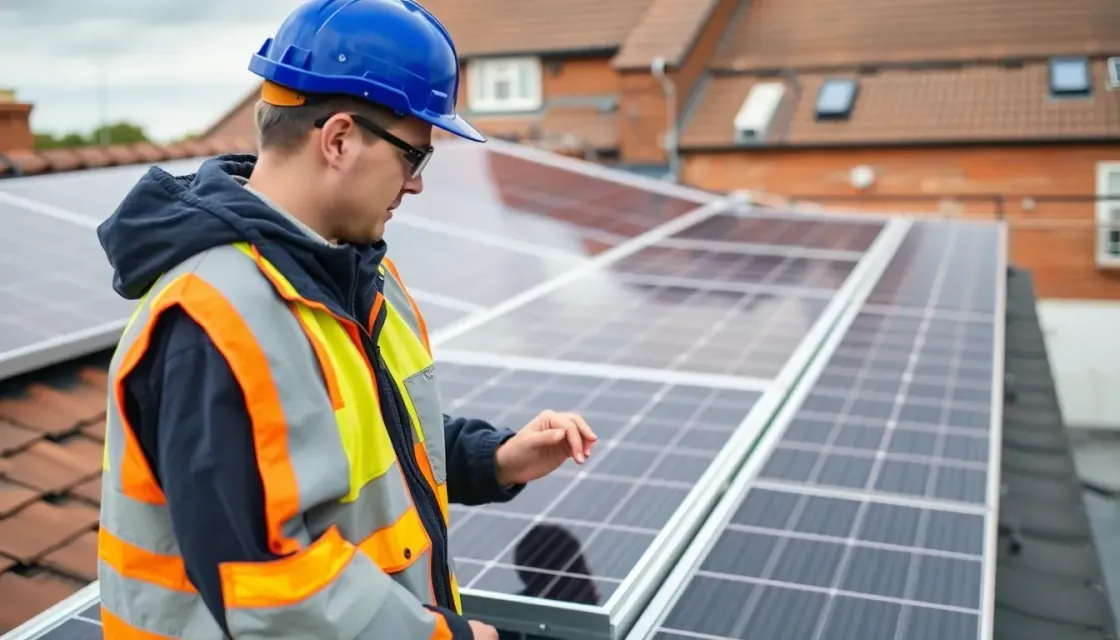
MCS is the UK quality mark for small-scale renewable installations such as solar panels. It sets standards for installers and products. For most homeowners, it is therefore the clearest sign that the work meets a recognised bar.
Pier Solar designs and specifies your system. Vetted, MCS-certified partners then install it. In particular, this page explains what the certificate gives you and how to check it.
What MCS certification means
An MCS installer is assessed against published standards. The system must also use certified products and follow the installation standard. For example, that standard includes a check, by a competent person, that your roof can carry the panels.
When the job ends, your installer registers it and issues an MCS certificate. You should receive it within about ten working days of finishing. Keep it safe, because you may need it for years.
Our explainer on MCS certification for homeowners goes further into what the scheme checks.
Why the certificate matters
The certificate has three practical uses. First, it is the standard proof you need to join the Smart Export Guarantee. This scheme pays you for surplus solar power you send to the grid. To join, you need an MCS-certified system and a meter that records what you export.
Second, it supports your warranty claims. Buyers and solicitors often ask for it when you sell the property. Third, it shows that a consumer code covers the work.
MCS installers who sell to homeowners belong to an approved consumer code, such as RECC or HIES. These codes cover complaints, so you have a route to follow if something goes wrong.
Grants, schemes and MCS
There are no dedicated UK Government solar panel grants, so be wary of anyone who offers "free solar". Some low-income households in England may get solar through the Warm Homes: Local Grant. In Wales, the Nest scheme may help eligible households.
Where support does exist, it may expect certified installers. Our overview of solar panel grants and schemes shows what is open and who can apply. However, check eligibility before you plan around any grant.
Planning permission and MCS
MCS does not replace planning checks. In England, for instance, panels have limits on how far they stick out from the roof, and on how high they sit. Listed buildings need consent before you add solar. In Scotland, most homes can add solar without a planning application, but conservation areas and listed buildings have extra limits.
Our guide on planning permission for solar panels explains the rules by nation. Your design will flag anything that needs a council check, so you can act before work starts. Meanwhile, our page on solar panels in Scotland covers the Scottish rules in more depth.
How to check an installer
Do not rely on a logo on a van. Check the following before you sign:
- MCS registration, which you can look up on the MCS website.
- The consumer code, such as RECC or HIES, and the membership number.
- A written quote, with equipment models and a full specification.
- The certificate timeline, so you know when to expect your MCS certificate.
- Warranty terms, covering both products and workmanship.
If an installer will not give these details, treat that as a warning.
What a certified installation typically costs
Certification does not change the price in itself, yet it does shape what you get. A typical 4 to 4.5 kWp home system typically costs roughly £6,000 to £8,000 installed, based on DESNZ data and the Energy Saving Trust. Installing solar panels in a home in Great Britain is currently VAT-free until 31 March 2027.
After that date, the rate is due to return to 5%, unless the government changes it. Business buildings are not covered by the relief. Since a very low quote may skip paperwork, compare scope as well as price.
How this fits with our other services
MCS work follows from a proper design, and cover follows the work. Our extended workmanship warranties add cover beyond the standard terms. For an overview of how the pieces join up, see our bespoke solar system design service.
MCS-certified work across the UK
Partners cover many regions, while local conditions differ. For example, solar installation in Coventry covers what homeowners there should check. Similarly, our page on solar panels in Plymouth looks at output on the south coast. Meanwhile, solar installation in Milton Keynes shows how local factors shape the design.
Next steps
Send your details through the online enquiry form. We will reply with a design and specification for our MCS-certified partners to price.
Frequently Asked Questions
- To be paid under the Smart Export Guarantee, you normally need an MCS certificate. It is also a record of who installed your system and when.
- Look up the company on the MCS website and ask for the certification details in writing. Also check their consumer code membership.
- Your installer should give you the certificate within about ten working days of finishing. Chase it if it does not arrive.
- No. Pier Solar designs and specifies the system, and vetted, MCS-certified partners install it.