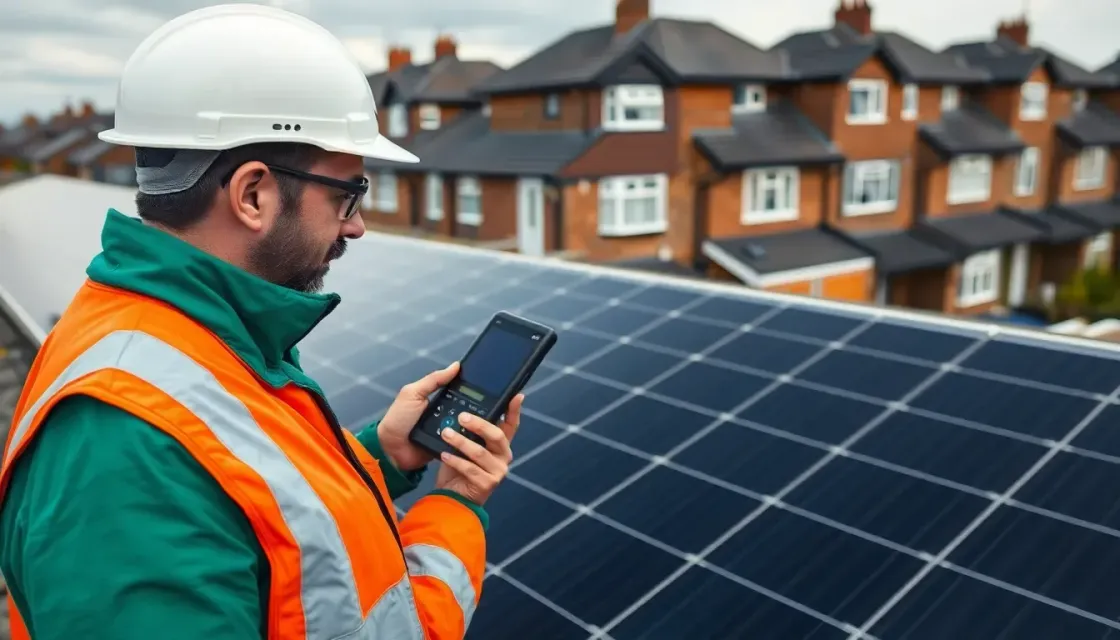
Solar panels have no moving parts, so they need little attention. Even so, they sit outside for decades. Wind, weather, birds and ageing electronics can all cause problems, and many are hard to see from the ground, so a proper check helps.
A health check tests the whole system against its design. Pier Solar sets out what the check should cover, and our vetted partners carry out the work. This page explains what is checked and how to read the results.
What a health check covers
A good check looks at four areas. The panels come first. The inspector looks for cracks, loose fixings, discolouration and dirt. They also check for new shade, for example a tree that has grown since the install.
The inverter comes next. It is the part most likely to need replacing, usually after about 12 years. The check reads fault logs and confirms that it is running normally.
Then comes the wiring. The inspector checks connectors, isolators and cable runs for wear, heat damage or pests. Finally, the check compares output with the design. If the system makes much less than expected, it needs a closer look because something is wrong.
Why checks matter
Solar panels should typically last 25 years or more, according to the Energy Saving Trust. Panels slowly lose output, typically around half a percent a year, so a small decline is normal. However, a larger drop is not.
Faults can hide, because the system still works while it underperforms. For example, one failed panel or a tripped string may cut output without any warning. Our guide to how long solar panels last explains what ages first, and what to plan for.
A check also keeps your paperwork in order. If you ever make a warranty claim, a record of regular checks helps show the system was looked after.
Cleaning and upkeep
Most UK panels clean themselves in the rain when they are tilted at 15 degrees or more. Even so, bird droppings, moss and leaves can build up in some spots. Our article on solar panel maintenance and cleaning covers what is safe to do yourself and when to call a professional.
Never climb onto a roof to clean panels. Roof work carries real risk, because a fall can be serious. Use a qualified person, with safe access in place.
What a health check involves
A visit has a clear order. First, the inspector reviews your monitoring data and any alerts. Then they inspect the panels, fixings and cables. After that, they test the inverter and read its logs.
Finally, you receive a written report. It should list what was checked, what was found and what to do next. Ask for photographs of any problem, since they make follow-up work easier to price.
Your monitoring helps here. Specifically, if you have smart energy monitoring, the inspector can start from the trends rather than from a blank page.
What to check when you book
Use these points to compare health check offers:
- What is inspected, in writing, including the inverter and wiring.
- Who does the work, and whether they are MCS-certified.
- What the report contains, including photographs.
- Whether repairs are quoted separately, and at what rates.
- How it affects your warranty, since some terms ask for regular servicing.
- Whether the check is on the roof or from the ground, which changes the depth.
A very cheap check may be only a visual look from below. That has value, but it is not a full test.
How checks connect to our other services
A check works best with strong cover behind it. Our extended workmanship warranties set out what we arrange for the install itself. A check also lets you compare the real system with the one on your MCS certificate. Our explainer on MCS certification shows what that certificate records.
Health checks across the UK
Weather and roofs differ by place, yet the checks follow the same pattern. For example, solar installation in Manchester covers output in the North West. Similarly, our page on solar panels in Leeds and our guide to solar installation in Liverpool show how local conditions shape the design.
Next steps
Tell us about your system through the online enquiry form. We will advise on the right level of check and arrange a visit through our partners.
Frequently Asked Questions
- There is no single rule. Many owners choose a check every few years, and sooner if monitoring shows a drop. Check your warranty terms, since some set a schedule.
- You can watch your monitoring app and look at the panels from the ground. Do not go onto the roof. A qualified person should do any roof inspection.
- The report should explain it and suggest a fix. Check whether your product or workmanship warranty covers the repair.
- No. A check looks for faults and wear. Cleaning removes dirt, although most UK panels clean themselves in the rain.