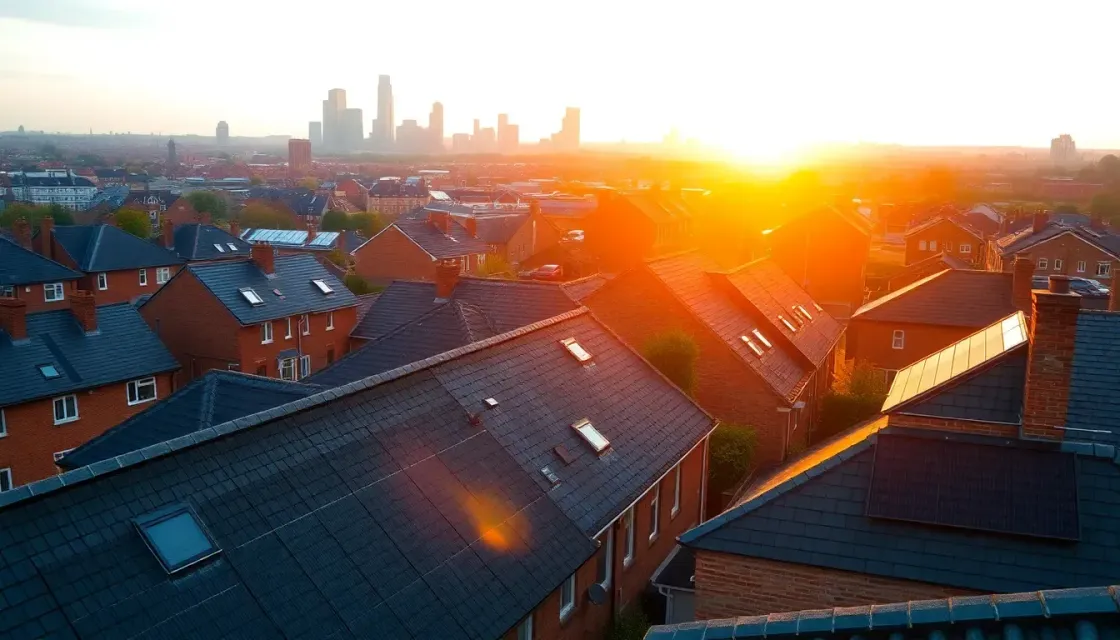
Southampton is one of the better places in the UK to put panels on a roof. The south coast gets more usable sunlight than the north, so each panel typically earns more here. This page explains what that means for your home or small business, and how a Pier Solar project runs.
Solar output in Southampton
We modelled the city with PVGIS, the European Commission's free solar tool. For Southampton it gives about 1,080 kWh a year for every 1 kWp of panels, at an ideal angle and direction. These are modelled estimates, not a promise. Real roofs usually produce a little less.
A typical home system is around 4 kWp, which is about nine or ten modern panels. In Southampton that could make roughly 4,300 kWh a year on a well-placed roof. For comparison, a typical home uses about 2,500 kWh of electricity a year, according to Ofgem. As a result, a roof of that size can cover more than your yearly use, although much of the power arrives at midday while many people are out.
Roof direction matters, however. A south-facing roof at a 30 to 45 degree pitch is ideal. East or west roofs typically still make about 80% as much, so they are worth a look. Our bespoke solar system design service models your exact roof, because every roof differs.
Homes, roofs and planning in Southampton
Most homes in England can add panels without a planning application. However, the rules changed on 27 August 2026. On a pitched roof, panels can stick out no more than 20 cm and must stay below the highest point. On a flat roof, they can usually rise no more than 60 cm.
Some properties have extra limits. Southampton City Council says your rights depend on three things. These are whether the home is in a conservation area, whether it is a listed building, and whether an Article 4 direction removes permitted development rights. A listed building needs consent before you add panels. Similarly, in a conservation area, panels on street-facing walls are restricted.
The council publishes a conservation area map and a list of areas on its website. Check both before you plan. If your street is covered, we raise it at the design stage, so the layout suits the council's view from the start. Our team also checks the roof, since a competent person must confirm it can carry the panels before installation.
How a Pier Solar project runs in Southampton
Pier Solar designs and specifies each system. We do not fit it ourselves. Vetted, MCS-certified installation partners do the work, and we coordinate the job from the first survey to handover.
Here is the usual order of work.
- You send an enquiry through our online form, with a few details about your roof and bills.
- We design the system and set out the panels, inverter and any battery.
- A partner installs it to our specification.
- The partner notifies your network operator, or applies first for larger systems.
- You receive an MCS certificate, usually within about ten working days.
Southampton's network operator is Southern Electric Power Distribution, part of SSEN. Your installer normally handles the paperwork. Small systems up to 3.68 kW per phase are notified within 28 days of installation. However, bigger systems need approval before they are connected, so we plan for that early. Our guide to MCS certification for homeowners explains why the certificate matters.
Costs, savings and export
A typical 4 to 4.5 kWp home system typically costs roughly £6,000 to £8,000 installed, based on government cost data for 2025/26. Installing solar in a home in Great Britain is currently VAT-free until 31 March 2027. Still, from 1 April 2027 the rate is due to return to 5%, unless the government changes it.
Each kWh of solar you use saves the unit rate you would otherwise pay. The Smart Export Guarantee pays you for surplus power you send to the grid. Because each supplier sets its own rate, compare tariffs first. The Energy Saving Trust puts payback at roughly 9 to 12 years in its example locations. Our guide to solar inverter types shows how your choice affects cost and performance.
Southampton City Council has also promoted Solar Together Hampshire, a group-buying scheme. Rounds open and close, so check the council's page for the current position.
Small firms can benefit too. However, the VAT relief covers homes only, so business buildings are normally charged standard-rate VAT. Read our guide to solar panels for business premises and ask an accountant about tax relief.
After installation, smart energy monitoring shows what you generate and use each day. Meanwhile, system health checks help keep output on track.
Nearby areas we cover
If you live along the coast, the same design approach applies. We also cover solar installation in Brighton to the east and solar panels in Plymouth to the west. Output and planning rules differ a little in each place, so every quote starts with your own roof.
Frequently Asked Questions
- Usually not for an ordinary house in England, if the panels stay within the permitted limits. However, listed buildings and some conservation areas need consent first. Check with Southampton City Council before you commit.
- PVGIS models about 1,080 kWh a year per kWp on an ideal roof. A 4 kWp system could therefore make roughly 4,300 kWh. Your own roof will differ, so we model it before quoting.
- Yes. Home batteries installed with solar, or added later, are covered by the same VAT relief until 31 March 2027. We can leave space in the design for one.
- A vetted, MCS-certified partner installs them to our specification. Pier Solar designs the system and coordinates the project. Start with our online enquiry form.