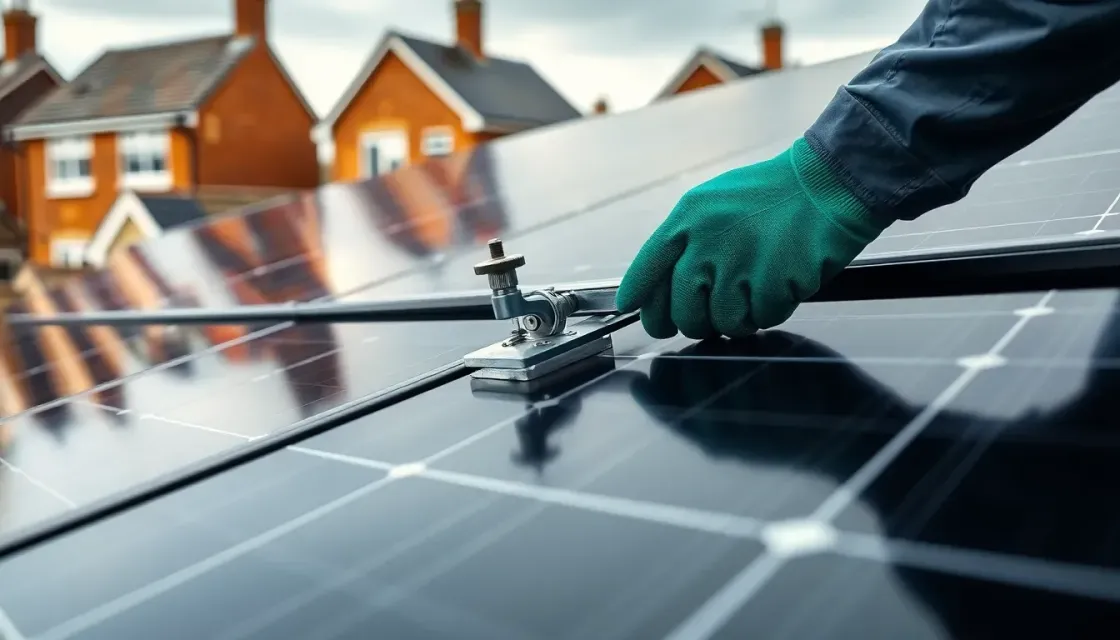
Panels catch the sunlight and the inverter turns it into power your home can use. The two must suit each other, and they must suit your roof. Pier Solar specifies both as one matched system, then vetted, MCS-certified partners carry out the installation.
This page explains what we specify, what it typically costs and how to judge a quote. It also shows how the work fits with our other services.
What we specify
Every installation starts from the design. We choose the panel size and number to fit your roof and your usage. We then pick an inverter that handles the array, any shading and any battery you plan to add.
The panels are the long-life part. They should typically last 25 years or more, although output slowly drops by around half a percent a year. The inverter is different. It usually needs replacing after about 12 years, so its warranty matters.
Because of this, we compare inverter warranties as closely as panel specifications. The Energy Saving Trust notes that inverter warranties commonly start at five years and can often be extended up to 15.
String, micro and hybrid inverters
A string inverter is one box that serves a whole row of panels. It is simple and usually the lowest cost. However, shade on one panel can reduce the output of the whole string.
Microinverters sit behind each panel. They help on roofs with shade or several directions, since each panel works on its own. A hybrid inverter handles panels and a battery together, so it suits homes that plan to add storage.
Which one is right depends on your roof. Our guide to string, micro and hybrid inverters sets out the trade-offs in plain terms.
How many panels and what size
A typical home system is around 4 to 4.5 kWp. That is about nine or ten modern panels. Your own figure depends on your usage, your roof area and your budget, so it can be higher or lower.
Our article on how many solar panels you need walks through the sums. For example, it shows why a home with an electric car often needs a bigger array.
Roof direction also changes the answer. A south-facing roof at a 30 to 45 degree pitch is ideal. East or west roofs still typically make about 80% as much, so a split array can be sensible.
On-roof and in-roof mounting
Most systems sit on rails above the existing tiles. In-roof panels sit flush with the roof, but they are a different, usually costlier, job. Your design team will advise.
The roof needs a check first. A competent person must confirm that your roof can carry the panels before installation. As a result, we flag any roof that needs a closer look at the design stage.
What installation typically costs
A typical 4 to 4.5 kWp home system typically costs roughly £6,000 to £8,000 installed, based on DESNZ data and the Energy Saving Trust. Batteries are extra. Installing solar panels in a home in Great Britain is currently VAT-free until 31 March 2027.
After that date, the rate is due to return to 5%, unless the government changes it. Business buildings are not covered by this relief. Our explainer on UK solar panel costs breaks down where the money goes.
What happens on installation
The work follows a set order. First, the partner checks the roof and sets up safe access. Then the rails, panels and inverter go in, and an electrician connects the system to your consumer unit.
Your installer normally handles the paperwork with the network operator. Small systems up to 3.68 kW per phase are notified within 28 days of installation. Bigger systems need approval before connection, so the timing differs.
Finally, the installer commissions the system and gives you an MCS certificate within about ten working days of finishing. You normally need that certificate to be paid under the Smart Export Guarantee.
What to check when comparing quotes
Use these points to compare like with like:
- Panel and inverter models, named in full, not just a brand.
- System size in kWp and the number of panels.
- Inverter warranty length, and the cost of an extension.
- MCS certification, and the consumer code the installer belongs to.
- What is included, such as scaffolding, the generation meter and DNO paperwork.
- Workmanship cover, which our extended workmanship warranties service arranges.
If one quote is far lower, find out why. The gap is often in the equipment or in what is left out.
Installation in towns across the UK
We specify the same way everywhere, but conditions vary. For example, solar installation in Liverpool covers local output and roof types. Similarly, our page on solar panels in Sheffield shows how the region compares. In Scotland, solar installation in Glasgow looks at lower yields and how to plan for them.
You can also pair this work with bespoke solar system design, which is where the specification begins.
Next steps
Send your details through the online enquiry form. We will reply with a design and specification that partners can price.
Frequently Asked Questions
- Solar panels should typically last 25 years or more. The inverter usually needs replacing after about 12 years, so check its warranty.
- Most roof installations need safe access, and that is often scaffolding. Check that your quote says whether it is included.
- Yes, panels still generate on cloudy days, though output is lower. They work best on unshaded roofs facing south.
- Your installer normally handles the network operator application or notification. You should not need to do it yourself.