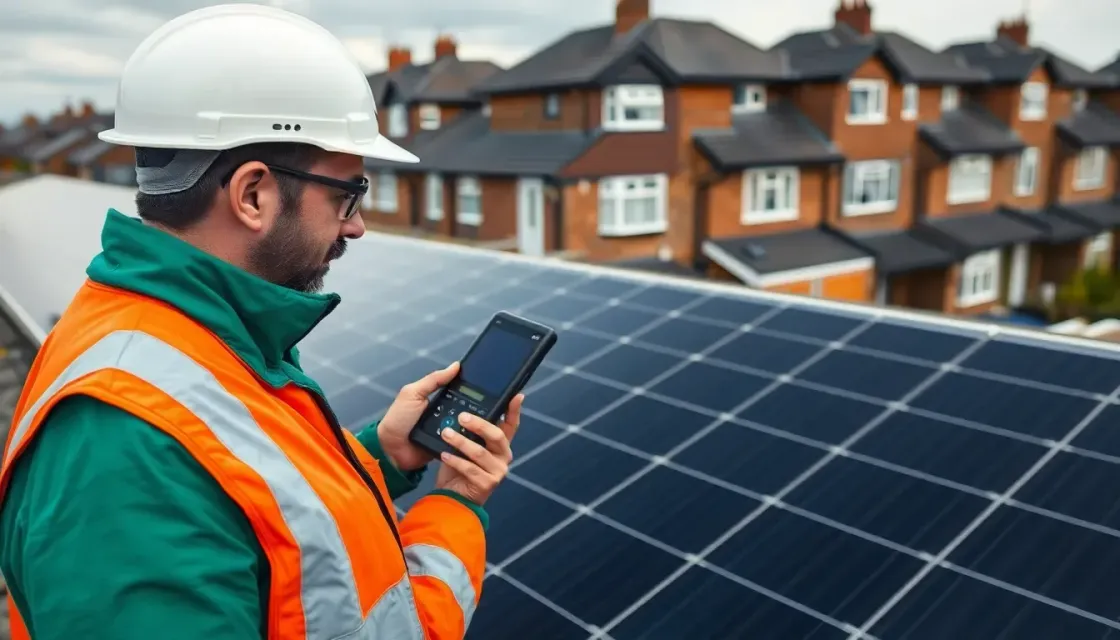
Solar panels work quietly. Without monitoring, you only learn that something is wrong when a bill arrives. Monitoring shows the system working, day by day, so you can spot problems early, before they cost you.
Pier Solar specifies monitoring as part of the design. Vetted, MCS-certified partners install it with the system. This page explains what monitoring shows, what to look for and how it links to export payments.
What monitoring shows
Most monitoring has three views. The first is generation, which is what your panels make. The second is consumption, which is what your home uses. The third is export, which is the surplus you send to the grid.
Together, these views show how much of your solar power you use yourself. That figure matters, because each kWh of solar you use saves the unit rate you would otherwise pay. The Ofgem price cap electricity rate is about 26p per kWh from October to December 2026, and it changes every quarter.
If you have a battery, monitoring also shows when it charges and when it empties. For example, you can see whether it fills by midday and runs out by 10pm. That tells you if the size was right.
How it works
Most inverters already record generation and send it to an app. For consumption, a small clamp meter reads the power entering your home. A meter that records what you export is also needed for the Smart Export Guarantee, so check this too.
Data usually travels over your home wifi to a secure online service. You then read it on a phone or a computer. Because a weak wifi signal can break the link, we plan where the inverter and router sit during the design.
Monitoring costs vary with the equipment. Many inverters include a basic app. However, a fuller system with consumption data and alerts adds to the price. Your specification lists exactly what is included, so you can compare like with like.
Using the data to cut waste
The first win is timing. For example, if you know your panels peak at midday, you can run the washing machine or dishwasher then. As a result, you use more of your own power and export less.
The second win is spotting faults. A sudden drop in output on a sunny day is a clue. Panels slowly lose output, typically around half a percent a year, so a sharp fall is not normal ageing. It may point to shade, dirt or a fault.
Our guide to solar panel maintenance and cleaning explains what to check first. Panels tilted at 15 degrees or more are normally cleaned by UK rain, so most dips have another cause.
Monitoring and the Smart Export Guarantee
The Smart Export Guarantee pays you for surplus solar power you send to the grid. Each supplier sets its own rate, so compare tariffs before you choose. To join, you need an MCS-certified system and a meter that records exports.
Monitoring helps you check that your supplier pays for what you really export. Our explainer on the Smart Export Guarantee shows how to compare tariffs and what the scheme requires.
Monitoring with batteries
Monitoring matters most when you add storage, since a battery changes how your home uses solar power. Our guide to solar battery storage costs and sizing explains how to judge the size. Monitoring then tells you whether the choice works in daily use.
You can read more on our battery storage systems page. An EV adds another view, because you can see how much of each charge came from your roof.
What to check when comparing quotes
Ask these questions before you buy:
- What is included, such as the app, the clamp meter and alerts.
- Whether data is stored, and for how long.
- Whether it works with a battery or charger you may add later.
- Who sees the data, and how it is protected.
- What happens if the service closes, since some apps rely on a supplier.
- Whether the installer sets it up, so it works on day one.
Be wary of monitoring that only works with one brand of add-on. Flexibility matters over a 25-year system life.
Monitoring in practice across the UK
The same tools suit every region, although the numbers differ. For example, solar installation in Brighton covers a part of the country with some of the highest modelled output. Similarly, our page on solar panels in London looks at urban roofs. Meanwhile, solar installation in Birmingham shows what a typical midlands home can expect.
Regular reviews help too. Our system health checks use your monitoring data to look for early faults.
Next steps
Tell us what you want to see and track through the online enquiry form. We will include monitoring in your design and specification.
Frequently Asked Questions
- It is not compulsory, but it is useful. Without it, you may not notice a fault for months, so we recommend it.
- Most systems need an internet link to send data to an app. If your signal is weak, a wired link or a wifi booster can help.
- Yes. It shows when your panels peak, so you can move washing or dishwasher cycles to that time. This lifts the share of solar power you use.
- Monitoring does not trigger payments, but it helps you check them. You still need an MCS certificate and an export meter to join.