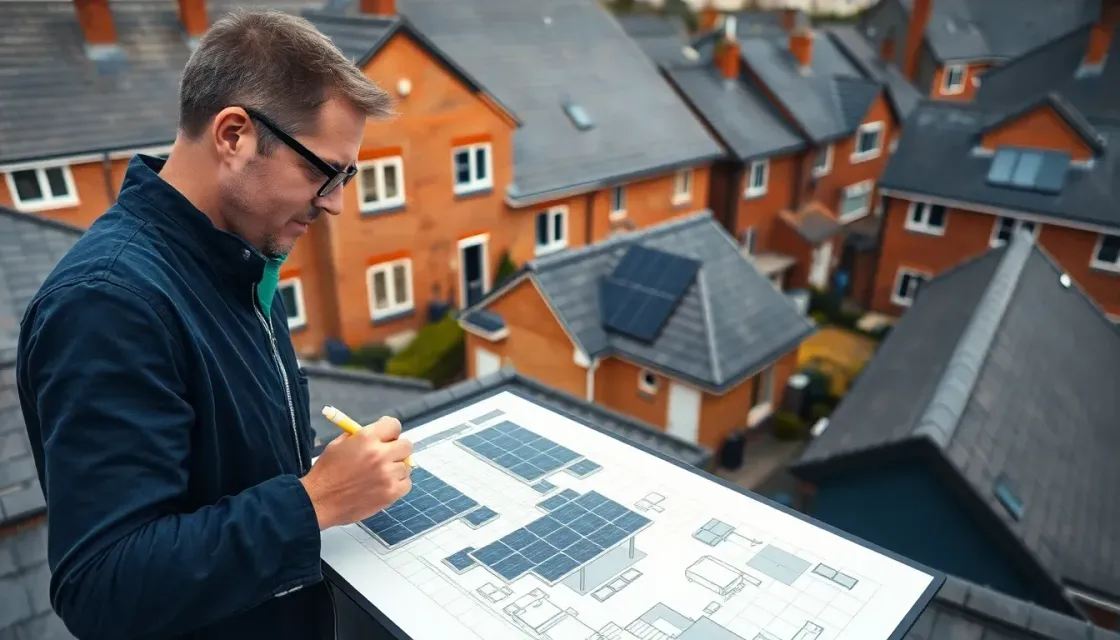
Bespoke solar design means the system is drawn for your building, not picked from a shelf. Roof shape, shade, pitch, direction and your daily habits all change what works best. A generic package ignores most of that, yet these details drive the results.
Pier Solar designs and specifies the system. Vetted, MCS-certified partners then install it. Because the design comes first, every installer prices the same plan, so quotes are easy to compare.
What a design includes
A full design is more than a panel count. It covers where each panel goes, which inverter suits the array and how the system connects to your consumer unit. It also notes any battery, EV charger or monitoring you want now or later, since adding them afterwards can cost more.
Roof direction matters. A south-facing roof at a 30 to 45 degree pitch is ideal. East or west roofs still typically make about 80% as much, so they are often worth using. Our design also checks for shade from trees, chimneys and neighbouring buildings, because shade can cut output sharply.
Before installation, a competent person must check that your roof can carry the panels. The design flags any roof that needs closer inspection. For example, an unusual roof may need a structural engineer.
How we size the system
We begin with how much electricity you use and when. A typical home uses about 2,500 kWh a year, according to Ofgem. However, a home with an electric car or a heat pump uses far more, so the right array is larger.
Location also plays a part. In the UK, a well-placed 1 kWp of panels typically makes about 850 to 1,150 kWh a year. The north of Scotland and the south coast sit at opposite ends of that range. As a result, two identical systems can perform differently.
Our guide on how many panels you need shows the sums. A typical home system is around 4 to 4.5 kWp, which is about nine or ten modern panels. Your roof may suit more or fewer, since panel size varies.
What a designed system typically costs
Installed cost depends on size, roof access and equipment. DESNZ cost data and the Energy Saving Trust together suggest that a typical 4 to 4.5 kWp home system costs roughly £6,000 to £8,000 installed. Batteries are extra, although they share the same VAT relief. Installing solar panels in a home in Great Britain is currently VAT-free until 31 March 2027.
Prices fell again in 2025/26, according to government data. Even so, your quote should reflect your roof, not an average. Our breakdown of UK solar panel costs explains what moves the price up or down.
Cost is only half the question, because return matters too. The Energy Saving Trust puts payback at roughly 9 to 12 years in its example locations. Our article on whether solar is worth it looks at that return in more detail.
Planning and permissions in the design
Most homes can add panels without a planning application, but the rules differ by nation. In Scotland, most homes can add solar without one, while listed buildings and conservation areas have extra limits. Our guide to solar panels in Scotland covers the details.
In England and Wales, limits apply on how far panels stick out and how high they sit. Listed buildings need consent first. In conservation areas, check with the council before you commit. We build these checks into the specification, so nothing is a surprise on the day.
What to check when comparing quotes
When you compare designs or prices, look for these points:
- A written specification, with panel model, inverter model and layout.
- An output estimate and the assumptions behind it.
- MCS certification, which you normally need to get paid under the Smart Export Guarantee.
- Warranty terms, covering products and workmanship.
- What is excluded, such as scaffolding or electrical upgrades.
Be wary of quotes that give a savings figure with no working. Instead, remember that each kWh of solar you use saves the unit rate you would otherwise pay. That rate changes every quarter.
How design connects to our other services
A bespoke design is the first step in a longer chain. Specifically, it feeds straight into premium panel and inverter installation, where our partners build exactly what the plan says. It also links to battery storage systems, which are far easier to plan in from the start because the inverter choice matters.
Where we design solar systems
We design across the UK, and each region brings its own questions. For example, our page on solar installation in Birmingham looks at local output and planning. Similarly, solar panels in Manchester shows how the region compares. Meanwhile, home solar in Leeds covers a local group-buying scheme.
Next steps
Tell us about your roof and your usage through the online enquiry form. We will come back with a design and specification that partners can price.
Frequently Asked Questions
- Not necessarily. A design sized to your usage avoids paying for panels you do not need. It also means each installer prices the same plan.
- No. Pier Solar designs and specifies the system. Vetted, MCS-certified partners carry out the installation.
- Most roofs can work, including east and west ones. A competent person must check the roof can carry the panels before installation.
- Yes, but it is simpler and cheaper to plan for them now. We design the inverter and wiring so that they can be added.