Pier Solar designs bespoke solar systems for Leicester homes and small businesses. Vetted, MCS-certified partners then install them. This page covers output, roofs, planning and costs.
Solar output in Leicester and what it means for a 4 kWp system
PVGIS models about 1,000 kWh a year from each kWp of panels in Leicester, at an ideal angle. That is a modelled estimate, not a guarantee. Real roofs are rarely at the ideal angle, so expect a little less.
A typical home system is around 4 to 4.5 kWp. At 4 kWp, the PVGIS figure gives roughly 4,000 kWh a year. A typical home uses about 2,500 kWh of electricity a year. The roof can therefore make more than an average household needs, but the savings depend on when you use the power.
A south-facing roof at a 30 to 45 degree pitch is ideal. East or west roofs typically still make about 80% of that. Our designers model your exact slope, so an east or west roof is still worth a look.
Homes, roofs and planning in Leicester
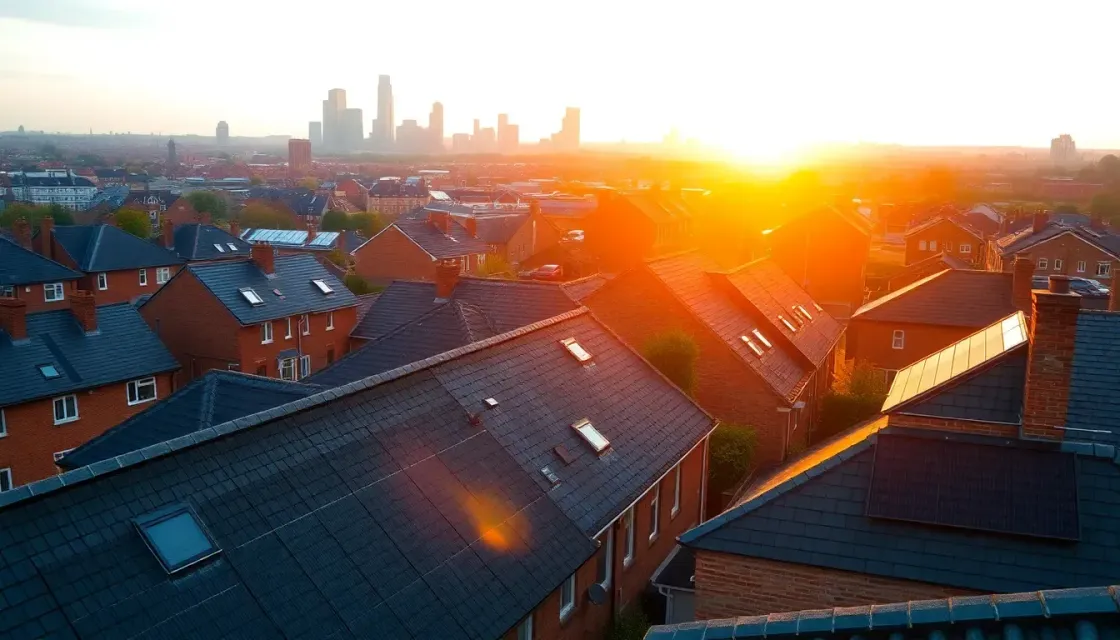
Leicester has rows of Victorian and Edwardian brick terraces, interwar semis and modern estates. Terraces often have long, uniform slopes. We check shade, roof condition and loft access before we design.
For example, most homes in England can add panels without a planning application. On a pitched roof, panels can stick out no more than 20 cm and must stay below the highest point. The rules changed on 27 August 2026, so we check the current text for every job. Our guide to planning permission for solar panels covers the detail.
Leicester has 25 conservation areas. Article 4 directions cover some of them, so works that change the outside of a building may need planning permission. A listed building needs consent before you add solar panels. Check with Leicester City Council before you order.
Leicester is in the National Grid Electricity Distribution area for the East Midlands. Your installer normally handles the network operator application or notification.
How a Pier Solar project runs in Leicester
In particular, we start with your bills, roof and goals. Next we design the system and write the specification. A vetted partner installs it, and we oversee the project through handover.
Meanwhile, all partners are MCS certified. Our page on MCS-certified installations explains the standard. MCS is the UK quality mark for small-scale renewable installations. Your installer should give you an MCS certificate within about ten working days of finishing.
Additionally, after handover, you can see what the panels make. Smart energy monitoring shows output and usage, which helps you shift appliances to sunny hours. For upkeep, read our guide to solar panel maintenance and cleaning.
Costs, savings and export
As a result, a typical 4 to 4.5 kWp home system typically costs roughly £6,000 to £8,000 installed, based on government cost data. Installing solar panels in a home in England is currently VAT-free, until 31 March 2027. From 1 April 2027 the rate is due to return to 5%, unless the government changes it.
Still, the Smart Export Guarantee pays you for surplus solar electricity you send to the grid. Each supplier sets its own export rate, so compare tariffs before you choose.
Panels should typically last 25 years or more. See our guide on how long solar panels last for inverter and battery lifespans.
Nearby areas we cover
In the East Midlands we also cover solar panel installation in Nottingham. To the south west, see our page on solar panels in Coventry.
To get started, send your postcode and roof details through our online enquiry form for a Leicester solar design.
Frequently Asked Questions
- Most homes do not, if the panels meet the size and height limits. Some conservation areas have Article 4 directions, so check with Leicester City Council.
- PVGIS models about 1,000 kWh a year per kWp at an ideal angle. A 4 kWp system would make roughly 4,000 kWh, though real roofs typically make less.
- Yes. East or west roofs typically still make about 80% of an ideal south-facing roof. Our designers model your exact slope.
- Vetted MCS-certified partners install to our design. Pier Solar designs the system and oversees the project.