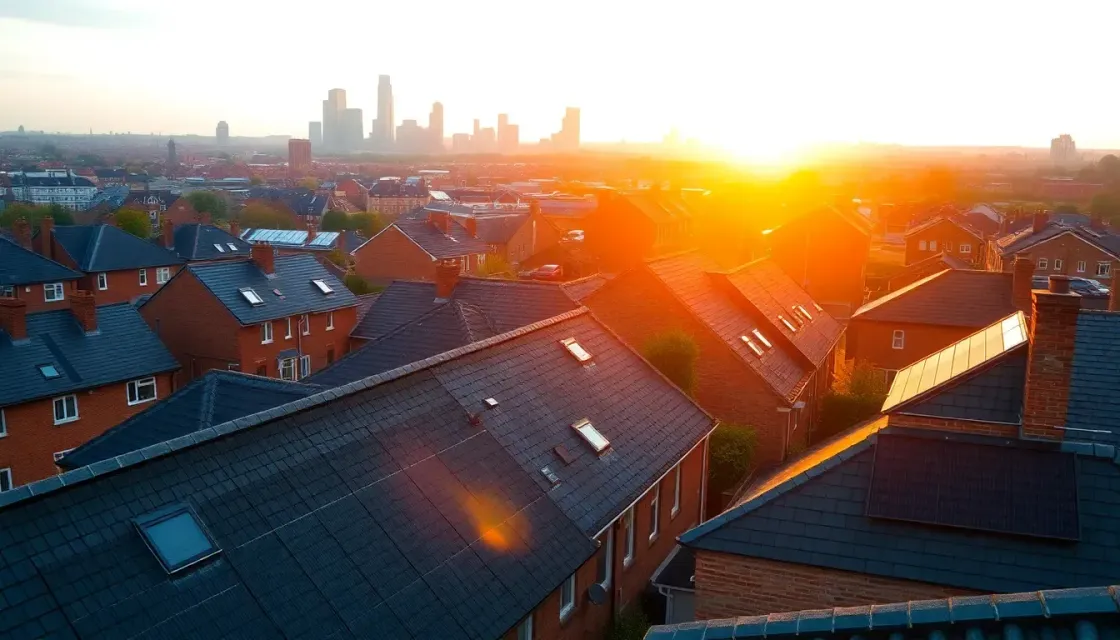
Pier Solar designs solar panel systems for Liverpool homes and small businesses. We write the specification, and vetted MCS-certified partners carry out the survey and install. Liverpool has many protected streets, so planning checks come early.
Liverpool City Council is the planning authority. Most homes can add panels without a planning application, but conservation areas need care.
Solar output in Liverpool and what it means for a 4 kWp system
The EU's PVGIS tool models a well-placed 1 kWp of panels in Liverpool at about 970 kWh a year. A typical 4 kWp system is about nine or ten modern panels. At the ideal angle, that adds up to roughly 3,880 kWh a year.
Real roofs are rarely at the ideal angle, therefore expect a little less. A south-facing roof at a 30 to 45 degree pitch is ideal. East or west roofs typically still make about 80%.
A typical home uses about 2,500 kWh of electricity a year, according to Ofgem. A 4 kWp system makes more than that over twelve months. Exposed roofs see strong wind, so the fixing design matters.
Homes, roofs and planning in Liverpool
Liverpool City Council has 36 conservation areas, which cover about 9% of the city. It says Article 4 directions apply in most of them. In those areas, outside changes may need planning permission.
In England, panels on a pitched roof can stick out no more than 20 cm and must stay below the highest point. On a flat roof, panels can usually rise no more than 60 cm above the roof, under the rules in force since 27 August 2026. In a conservation area, panels on street-facing walls are restricted, so check with the council first. A listed building, however, needs consent before you add solar panels. Check your street on the council's map before you plan the layout.
Business sites follow different planning rules, so check with the council. The VAT relief is for homes. Business buildings are normally charged standard-rate VAT, so ask an accountant. In England, rooftop solar is currently left out of business rates until 1 April 2035.
How a Pier Solar project runs in Liverpool
Pier Solar designs the system and writes the specification, while vetted MCS-certified partners then survey the roof and install it. We cover extended workmanship warranties and MCS-certified installations for homes and small businesses.
Design comes first. We model your roof, your shading and your daily use, then compare layouts. For a business roof, we also look at when your site uses power, because daytime use suits solar well.
A competent person must check your roof can carry the panels before installation, because safety comes first. Your installer then fits the system and tests it. Small systems up to 3.68 kW per phase are notified to the network operator within 28 days of installation. Bigger systems need approval before the installer connects them. Your installer normally handles the application or notification.
Your installer should give you an MCS certificate within about ten working days of finishing. You normally need that certificate to be paid under the Smart Export Guarantee. Additionally, Pier Solar arranges an extended workmanship warranty, on top of the manufacturer product warranties.
Costs, savings and export in Liverpool
A typical 4 to 4.5 kWp home system typically costs roughly £6,000 to £8,000 installed, based on government cost data. The Energy Saving Trust puts payback at roughly 9 to 12 years in its example locations. Business costs depend on roof size and use, so we quote each site.
Installing solar panels in a home in Great Britain is currently VAT-free, until 31 March 2027. From 1 April 2027 the rate is due to return to 5%, unless the government changes it. Each supplier sets its own export rate under the Smart Export Guarantee, therefore compare tariffs before you choose.
To see what the quality mark means, read what MCS means for homeowners. Business owners can read about solar panels for business sites. If you drive, see charging an electric car from solar.
Nearby areas we cover
We also design systems across the North West and Midlands. See our page on solar panel installation in Manchester for Greater Manchester. For the West Midlands, see solar panel installation in Birmingham.
Ready to talk? Send your details through our online enquiry form. We will review your roof, your use and your plans before we suggest a design, because every roof is different.
Frequently Asked Questions
- Most homes can add panels without a planning application, within the limits above. Liverpool has 36 conservation areas, and Article 4 directions cover most of them, so check with the council.
- Yes. Business buildings follow different planning rules, so check with the council. The VAT relief is for homes, so ask your accountant about tax.
- PVGIS models about 3,880 kWh a year at the ideal angle. A real roof typically makes less, depending on pitch, direction and shade.
- MCS is the UK quality mark for solar panels and other small renewables. You normally need an MCS certificate to be paid for exports.