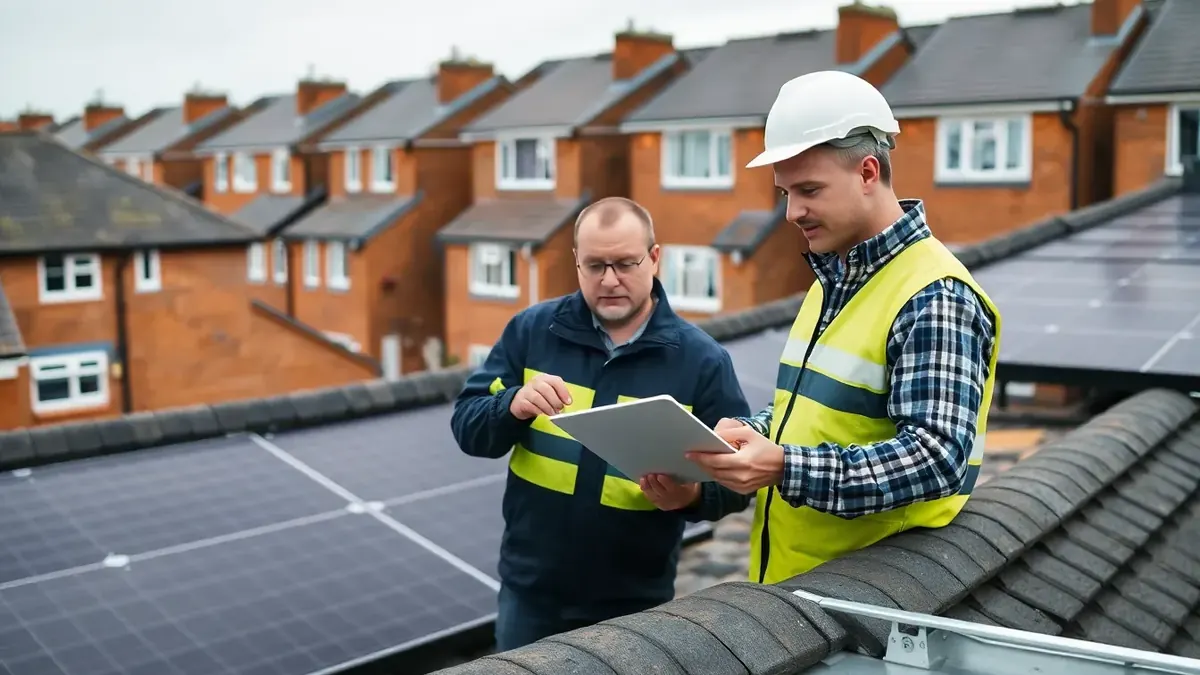
Are there solar panel grants in the UK? Not in the way many people hope. The Energy Saving Trust says there are no dedicated UK Government solar panel grants. Even so, some real help exists, from VAT relief to export payments and a few targeted schemes.
This guide is accurate as of October 2026. Schemes open and close often, so we point you to the official source for each one. Never trust an advert that promises free panels for everyone, because no such scheme exists.
The help that applies to most homes
Two things help almost every household. The first is VAT relief. Installing solar panels in a home in England, Scotland or Wales is currently VAT-free, until 31 March 2027. From 1 April 2027 the rate is due to return to 5%, unless the government changes it.
Home batteries installed with solar panels, or added later, are also covered by the same VAT relief. The relief is for homes, however. Business buildings are normally charged standard-rate VAT, so check with an accountant. Our guide to solar panels for business premises covers what else applies there.
The second is the Smart Export Guarantee. It pays you for surplus solar electricity you send to the grid. Larger energy suppliers must offer an export tariff, and some smaller suppliers offer one too. Each supplier sets its own rate, so compare tariffs before you choose.
Why MCS matters for payments
To join the Smart Export Guarantee, you need an MCS-certified system and a meter that records what you export. MCS is the UK quality mark for small-scale renewable installations such as solar panels. Your installer should give you an MCS certificate within about ten working days of finishing.
Because of that, choosing a certified installer protects your income as well as your quality. Read our explainer on MCS certification for the full picture. Pier Solar designs your system, and every install goes to a vetted partner through our MCS-certified installations route.
Targeted schemes that may apply
Several schemes aim at particular groups. Each has its own rules, so treat the list below as a signpost and not a promise.
| Scheme | Who it is for | Status as of October 2026 |
|---|---|---|
| Warm Homes: Local Grant (England) | Low-income, privately owned homes with a lower EPC rating | Apply through gov.uk; can include solar panels |
| ECO4 | Some low-income households | Due to close on 31 December 2026 |
| Nest (Wales) | Eligible Welsh households | May include some solar installs |
| Home Energy Scotland loans | Scottish homes | Interest-free loans for some upgrades; check what covers solar |
| Great British Insulation Scheme | Insulation only | Closed on 31 March 2026 |
In England, low-income homes with a lower EPC rating may get solar through the Warm Homes: Local Grant. The household income limit is usually £36,000 or less, although other routes exist, and your council contacts you after you apply. The scheme names solar panels, but we cannot say it covers batteries.
ECO4 is due to close on 31 December 2026, and the government has said there will be no successor supplier obligation. Ask your supplier or council what is open now. The Great British Insulation Scheme is irrelevant for solar, since it covers insulation only.
Wales and Scotland
In Wales, the Nest scheme may help eligible households, including with some solar installs. Nest checks your eligibility and offers free advice first. Homeowners in the capital can read more about solar installation in Cardiff before they apply.
In Scotland, Home Energy Scotland offers interest-free loans for some energy upgrades. Check what covers solar before you apply, because the rules differ by measure and change over time. We cannot confirm that a stand-alone solar or battery install is currently covered.
Local group-buying schemes
Some councils run group-buying schemes, where many homes buy together for a better price. Check yours for open rounds. Solar Together West of England, for example, ran rounds in 2021, 2023 and 2025, but its registrations were closed when we checked.
If you live in the south-west, our page on solar installation in Bristol explains how a design works whether or not a scheme is open. East Midlands readers may like our notes on solar installation in Nottingham. Always read a group scheme’s terms, because a fixed package may not suit your roof.
Loans and future support
The government’s Warm Homes Plan promises low-interest loans for solar, but details and dates are still to come. We do not know the rates, the eligibility or the launch date, so we do not count on it. Therefore, plan your budget around what is open today.
The Boiler Upgrade Scheme is for heat pumps, not solar panels. It is worth knowing about only so you do not mix the two up. Likewise, grants of up to £500 per socket for electric vehicle chargers are open to people in flats or rented homes, and landlords, until March 2027. They do not cover owner-occupied houses.
What to ask before you trust any offer
Scams and misleading adverts cluster around grants. A simple set of questions will protect you.
- Who runs the scheme, and can I find it on gov.uk or my council’s site?
- Am I eligible, and what proof will you need?
- Is the installer MCS certified?
- What will the finished system cost, and what is the full specification?
- Will it work with a battery later?
A well-built system should also stand on its own merits. It must keep working for years, so check the warranty terms and read our guide on how long solar panels last. The inverter is usually the part that needs replacing first, so ask about it up front.
Working out the real cost
Before you chase help, know the base price. A typical 4 to 4.5 kWp home system typically costs roughly £6,000 to £8,000 installed. Our breakdown of how much solar panels cost in the UK shows what drives that range.
A home battery typically costs from about £2,500 up to £10,000, depending on size. If you want one, see our battery storage systems page. Pier Solar designs and specifies, then vetted partners install, so you get one clear specification to compare. Send your details through our online enquiry form for a solar design and we will say what looks sensible for your home.
Sources
- Energy Saving Trust — Solar panels for your home
- GOV.UK — Apply for the Warm Homes: Local Grant
- GOV.UK — Warm Homes Plan
- GOV.UK — Extending the ECO4 end date: government response
- HMRC — VAT on energy-saving materials and heating equipment (Notice 708/6)
- Ofgem — Smart Export Guarantee
- Ofgem — Boiler Upgrade Scheme
- MCS — Solar photovoltaic (PV) for consumers
- Welsh Government — Nest: get help with energy efficiency
- Home Energy Scotland — Grant and loan terms and conditions
- West of England Combined Authority — Solar Together
- GOV.UK — Electric vehicle chargepoint grants