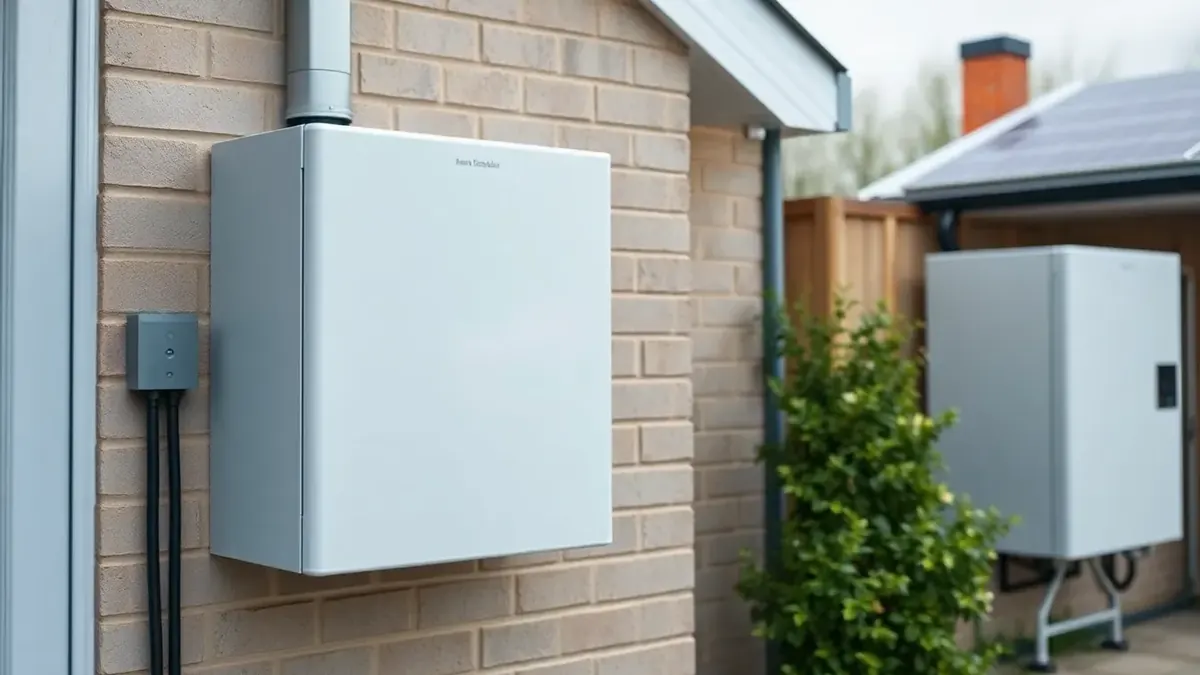
How much does solar battery storage cost in the UK? A home battery typically costs from about £2,500 up to £10,000, depending on size. The Energy Saving Trust gives a wider range of £1,500 to £10,000, with about £4,600 for a 5 kWh unit.
Whether a battery is worth that money depends on how you use power. This guide explains what drives the price, how to size a battery sensibly, and when you might be better off without one.
What a battery does
Solar panels make power in the day. Your home may use more of it in the evening, when the panels have stopped. A battery stores the surplus, so you can use it later instead of exporting it or buying from the grid.
That can raise the share of your solar power that you use yourself. Because self-use is normally worth more than exporting, a battery can add value. However, it also adds cost and has a shorter life than the panels.
What drives the cost
Size is the biggest factor. A 5 kWh battery costs less than a 10 kWh one, although the price per kWh does not always fall in a straight line. The Energy Saving Trust notes that a typical home system might be 10 kWh.
Several other things move the price.
- Capacity and power rating. Bigger units cost more, and so do units that can run more appliances at once.
- Retrofit or new. A battery installed with new panels is usually simpler than one added later.
- Inverter type. Some systems need a hybrid inverter or extra hardware to connect a battery.
- Brand and warranty. Longer cover and well-known makes carry a premium.
- Install complexity. Cable runs, wall space and fuse board work all take time.
Because the inverter choice matters here, ask your designer to explain it. For the equipment itself, see our battery storage systems page.
Typical cost bands
Prices change, so use these bands to orient yourself and not to budget to the pound.
| Battery size | Typical cost guide |
|---|---|
| Smaller units | From about £2,500 |
| 5 kWh | About £4,600 (Energy Saving Trust) |
| Larger units | Up to about £10,000 |
The Energy Saving Trust’s overall range is £1,500 to £10,000. Retail starting prices quoted by Which? sit at about £2,500 and above. In short, expect most good home batteries to land well above the lowest figures, so ask for a full quote.
VAT and timing
Home batteries installed with solar panels, or added later, are covered by the same VAT relief. Installing them in a home in England, Scotland or Wales is currently VAT-free, until 31 March 2027. From 1 April 2027 the rate is due to return to 5%, unless the government changes it.
Standalone batteries charged from the grid also qualify, according to HMRC’s guidance. A battery installed with solar panels is normally one single zero-rated supply. Business buildings are normally charged standard-rate VAT, so check with an accountant.
How to size a battery
Sizing starts with your daily use. A home that uses about 2,500 kWh of electricity a year averages roughly 7 kWh a day. That is a whole-day average, so your evening use may be smaller. Your smart meter or app can show the real split.
A sensible battery covers your evening and overnight use, not your whole day. If it is too big, it rarely fills, especially in winter. If it is too small, you miss out on stored power. Our guide on how many solar panels you need explains how to match panels to use first, so the battery has surplus to store.
Winter changes the picture
Panels still generate in winter and on cloudy days, but December output is typically about a third of July’s. In winter there is little surplus to store, so a battery often sits partly empty. For that reason it earns most between spring and autumn.
Our article on solar panels in winter and on cloudy days gives the monthly figures. Plan your expectations around the whole year, not the best month.
Exports versus storage
The Smart Export Guarantee pays you for surplus solar electricity you send to the grid. Each supplier sets its own export rate, so compare tariffs before you choose. A battery gives you the option to hold power back instead.
Whether storing beats exporting depends on what you pay for grid power and what your supplier pays for exports. We do not quote a rate here, because both change often. Read our explainer on the Smart Export Guarantee before you decide. The price cap for October to December 2026 puts electricity at about 26p per kWh, but it changes every quarter.
Lifespan and replacement
Home batteries typically last about 10 to 12 years. Solar panels should typically last 25 years or more, so you may replace a battery once during the panels’ life. Our guide to how long solar panels last covers the other parts of the system.
That shorter life should shape your sums. A battery that costs thousands and lasts about a decade must earn its keep within that time. Therefore, be cautious of any claim that a battery always pays back.
Planning, safety and monitoring
Most battery installs sit inside the home or garage, so they raise different questions from roof panels. Panels often fall under permitted development rights, but you should still check the rules. Our guide to planning permission for solar panels sets out the main limits. A competent installer handles the electrical safety and network paperwork.
Monitoring helps you learn how the battery behaves. A good app shows what you generate, store, use and export. Our smart energy monitoring page explains how that data can guide your choices.
Where to go next
Pier Solar designs and specifies each system, and vetted MCS-certified partners install it. That lets us size a battery to your use before you commit. Homeowners in many places ask about this, including those looking at solar installation in Southampton, solar installation in Newcastle upon Tyne and solar installation in Coventry.
To get a battery sized to your home, send your details through our online enquiry form for a solar design. We will tell you plainly if panels alone look like the better choice.
Sources
- Energy Saving Trust — Battery storage
- Which? — Solar panel costs
- HMRC — VAT on energy-saving materials and heating equipment (Notice 708/6)
- HMRC manual — VAT energy-saving materials, batteries (VENSAV3061)
- Ofgem — Smart Export Guarantee
- Ofgem — Changes to the energy price cap, 1 October to 31 December 2026
- European Commission JRC — PVGIS photovoltaic geographical information system
- Energy Saving Trust — Solar panels for your home